Full Stack Developer Career: A Beginner's Guide to Getting Started
What is a Full Stack Developer, and is Full Stack Development still a good career choice in 2026? Explore what Full Stack Developers do, the key responsibilities, the essential skills needed to get started and why this career path continues to offer exciting opportunities.

WHAT IS A FULL STACK DEVELOPER?
What you see on a website is only one part of the story. Behind every smooth user experience, there's a system working in the background.
A Full Stack Developer understands how to build and connect both.
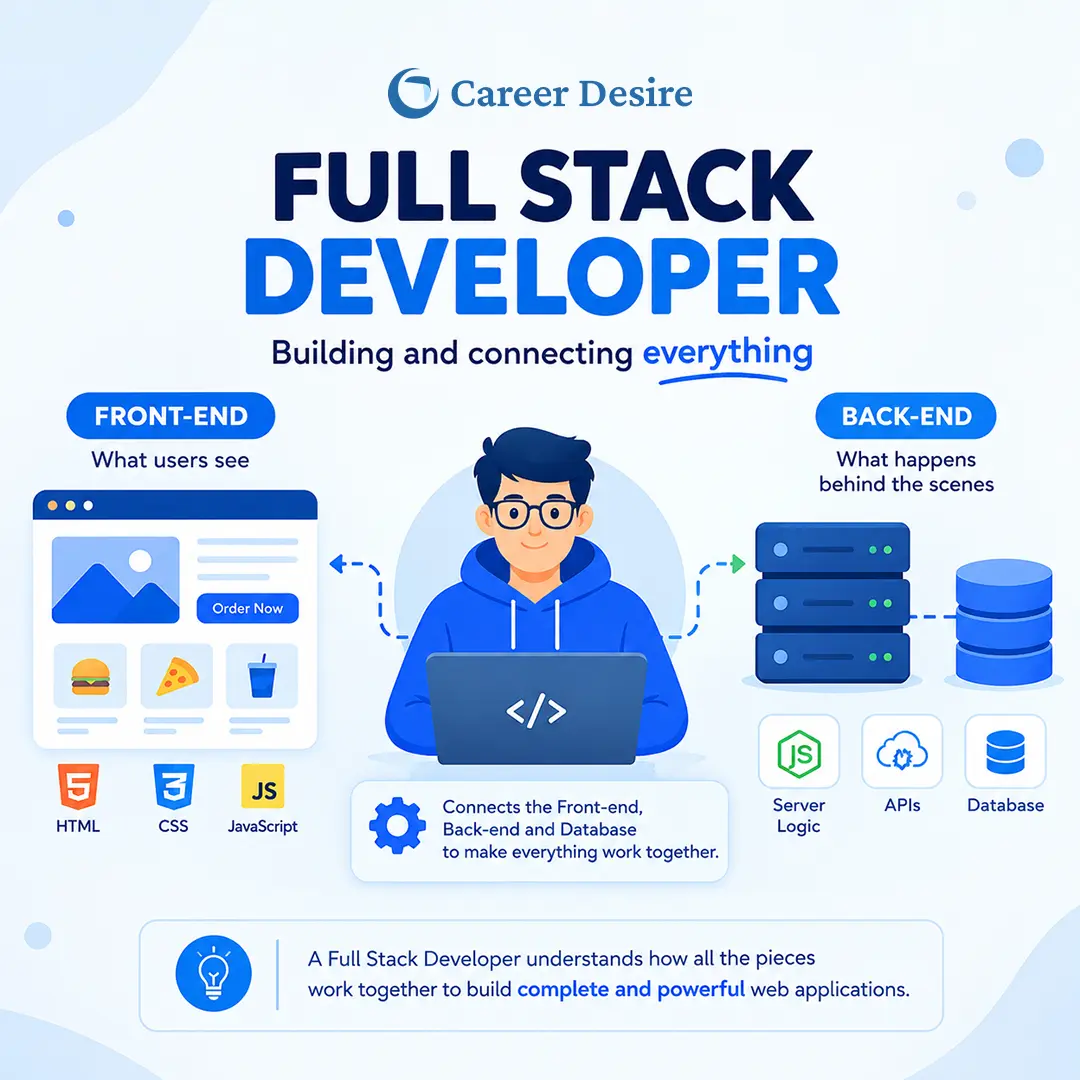
Think about ordering food through an app. You can browse restaurants, select your food and place an order. That's the part you can see and interact with. But behind the scenes, there's also a system handling your order, storing information and connecting different parts of the app.
A Full Stack Developer understands how to work on both sides.
They work with the front-end, which is everything users see and interact with, and the back-end, which handles the behind-the-scenes processes that make the website or app work. They also understand how data is stored and how different parts of an application communicate with each other.
Simply put, a Full Stack Developer has a broader understanding of how a web application works from start to finish. They don't have to be an expert in every technology, but they should understand how the different pieces work together.
Ready to explore whether Full Stack Development is the right career for you?THE ROLE OF A FULL STACK DEVELOPER
A Full Stack Developer is involved in different stages of building and improving a web application. Their work can vary depending on the company, team and project, but the role usually involves more than simply writing code.
For example, one day they might work on adding a new feature to an application. On another day, they could be fixing a problem, improving how a feature works or helping the team understand why something isn't working as expected.
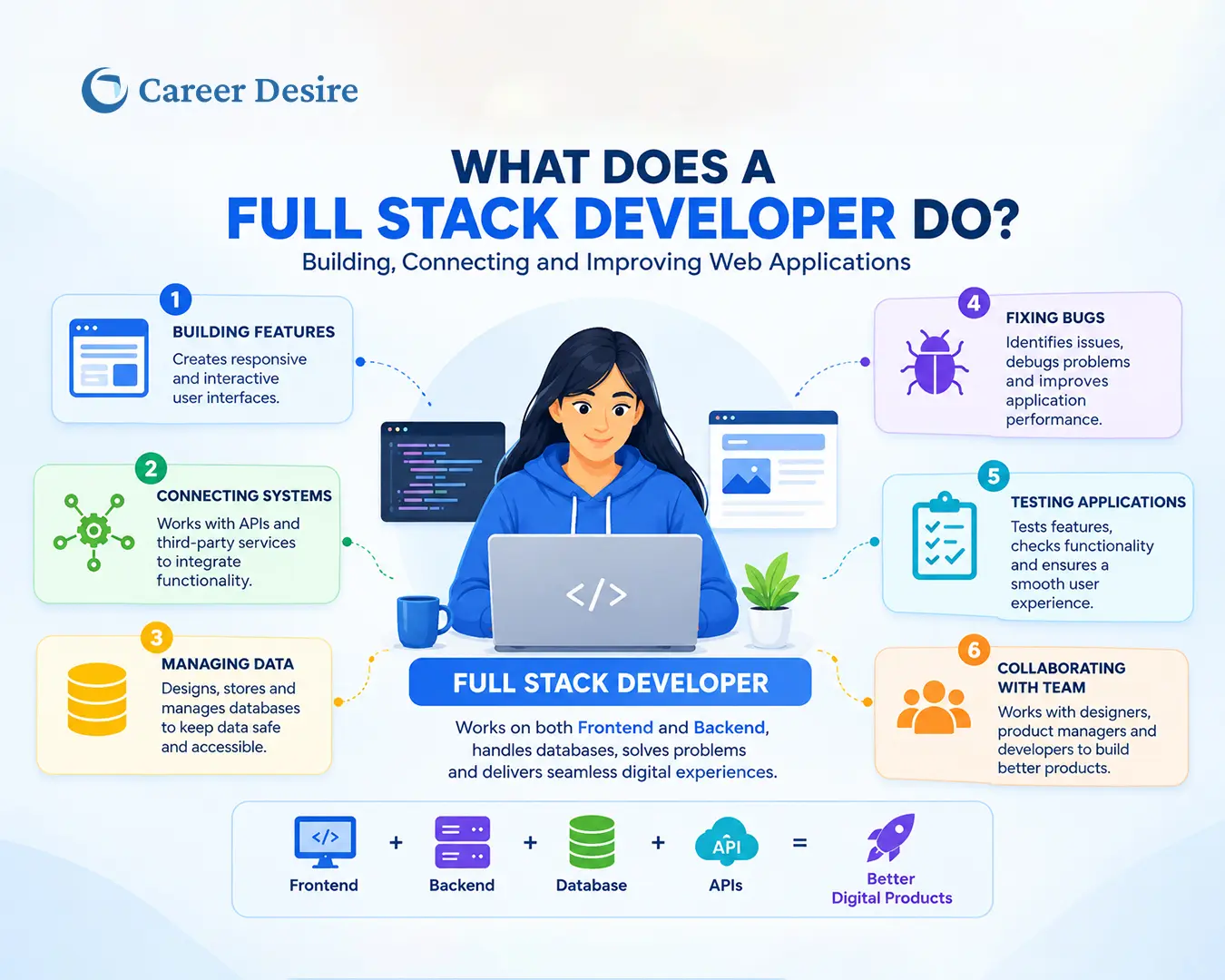
Some common responsibilities include:
- Building new features — Turning an idea or requirement into a working feature.
- Connecting different parts of an application — Making sure the various parts of a project work together properly.
- Working with data — Helping organise, store and use the information an application needs.
- Finding and fixing problems — Identifying bugs and figuring out what caused them.
- Testing and improving applications — Checking whether features work properly before users start using them.
- Working with a team — Collaborating with other developers, designers and sometimes people from non-technical teams.
One of the unique aspects of this role is that the work can vary from day to day. In startups and smaller companies, Full Stack Developers often handle multiple areas of a project. In larger organisations, they may focus more on a particular feature, application or part of the development process.
Simply put, a Full Stack Developer looks at the bigger picture and helps transform ideas into functional digital products.
Still not sure whether you're the right fit for a Full Stack Developer role?
Get the right guidance to explore career paths that truly suit you.IS FULL STACK DEVELOPMENT STILL WORTH IT IN 2026?
With AI, automation and new technologies changing the tech industry so quickly, it's completely normal to wonder — is Full Stack Development still a good career choice?
The short answer is yes, but there's more to it than that.
Full Stack Development is still a valuable career path because businesses continue to need websites, applications and digital products. According to the US Bureau of Labor Statistics, employment for software developers is expected to grow faster than the average for many other occupations in the coming years.
One of the biggest advantages of being a Full Stack Developer is that you understand the bigger picture. Instead of knowing only one part of an application, you have an understanding of both the frontend and backend.
This can be especially useful in startups and smaller teams, where developers may need to work on different parts of a project.
But here's the thing — you don't have to be an expert at everything. Today, companies often value developers who have a good understanding of the entire development process while also being particularly strong in at least one area, such as frontend, backend, databases or cloud technologies.
And what about AI? Well, AI is definitely changing how developers work.
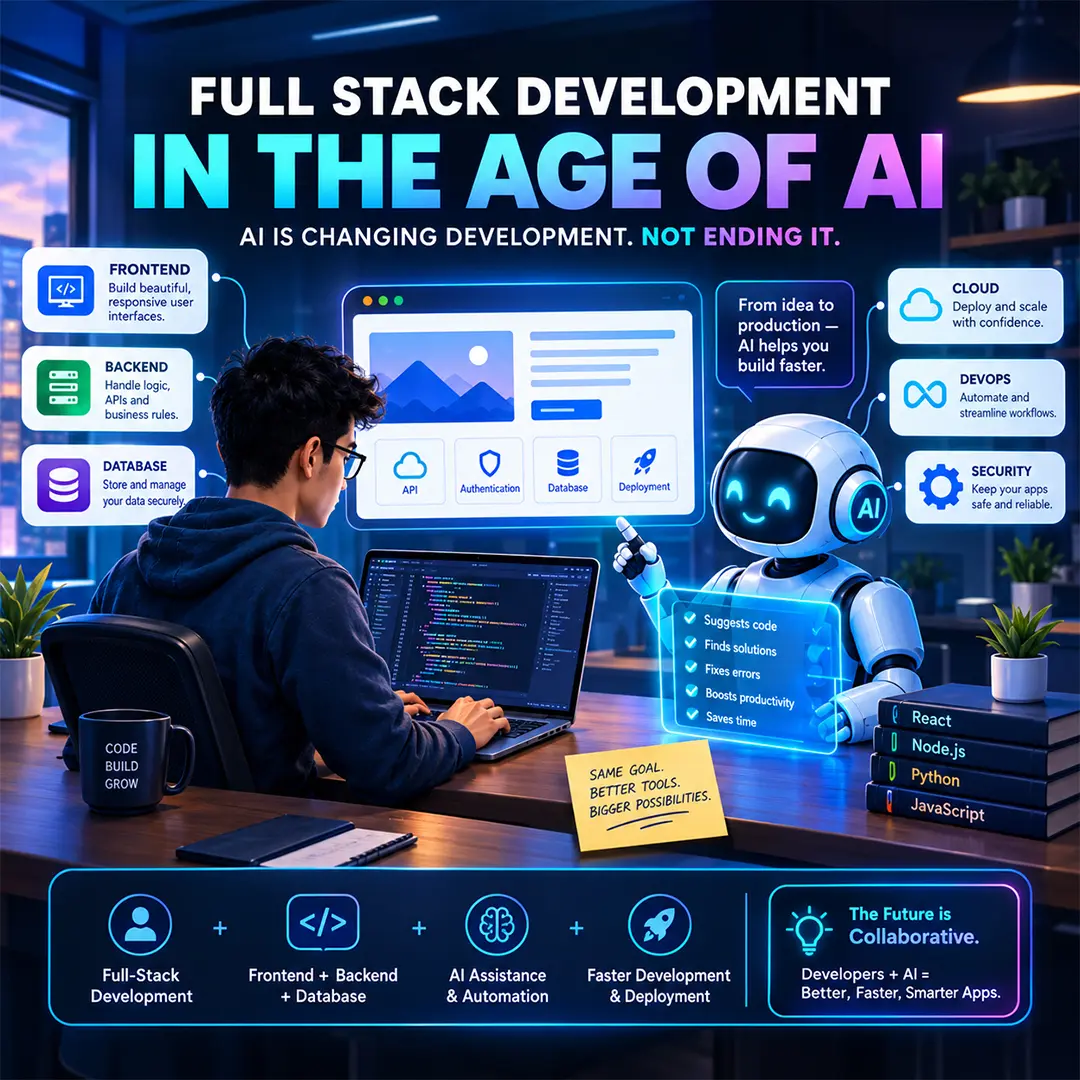
But rather than making developers completely unnecessary, it is becoming another tool developers need to learn and use effectively. Skills like problem-solving, understanding user needs and building reliable applications still matter.
So, is Full Stack Development a good career choice? Yes, especially if you enjoy problem-solving and don't mind continuously learning. The tech industry changes quickly, and Full Stack Development is not a career where you learn something once and stop there.
Explore the latest in-demand career options and discover where your skills could take you.SKILLS YOU NEED TO BECOME A FULL STACK DEVELOPER
If you've looked up Full Stack Development before, you've probably seen a huge list of technologies and thought, "Do I really have to learn all of this?"
Honestly, no.
You don't need to master dozens of programming languages and tools to get started. What matters is understanding the main areas of development and gradually building your skills in each one.
Start with the Frontend
First, you need to understand the part of a website that people actually see and interact with. This means learning the basics of HTML, CSS and JavaScript.
Once you're comfortable with these, you can move on to frameworks and libraries such as React to build more interactive websites and applications.
Then Learn the Backend
Next comes the part users don't usually see — the backend. This is where you learn how an application handles requests, processes information and performs different tasks behind the scenes.
There are several languages and frameworks you can choose from, so you don't need to learn all of them. Pick one path, understand it properly and build from there.
Understand Databases and APIs
Your application will probably need somewhere to store information. That's where databases come in.
You'll also come across APIs, which allow different parts of an application or different services to communicate with each other.
You don't need to know everything about them immediately, but understanding how they work is an important part of becoming a Full Stack Developer.
Get Comfortable with Development Tools
As you start building projects, you'll also use tools that make development easier. Git, for example, helps you track changes in your code and work with others.
Later, you may come across things like testing, cloud platforms, deployment, Docker and security. You can learn these step by step as you progress — you don't need to know them all before building your first project.
Don't Forget the Skills Beyond Coding
Here's something beginners often overlook — being a good developer isn't just about writing code.
You'll spend a lot of time finding solutions, understanding problems, learning new technologies and working with other people. So skills like problem-solving, communication, critical thinking and adaptability matter too.
Skillsoft also highlights problem-solving, communication, adaptability and having a big-picture understanding of development as important skills for Full Stack Developers.
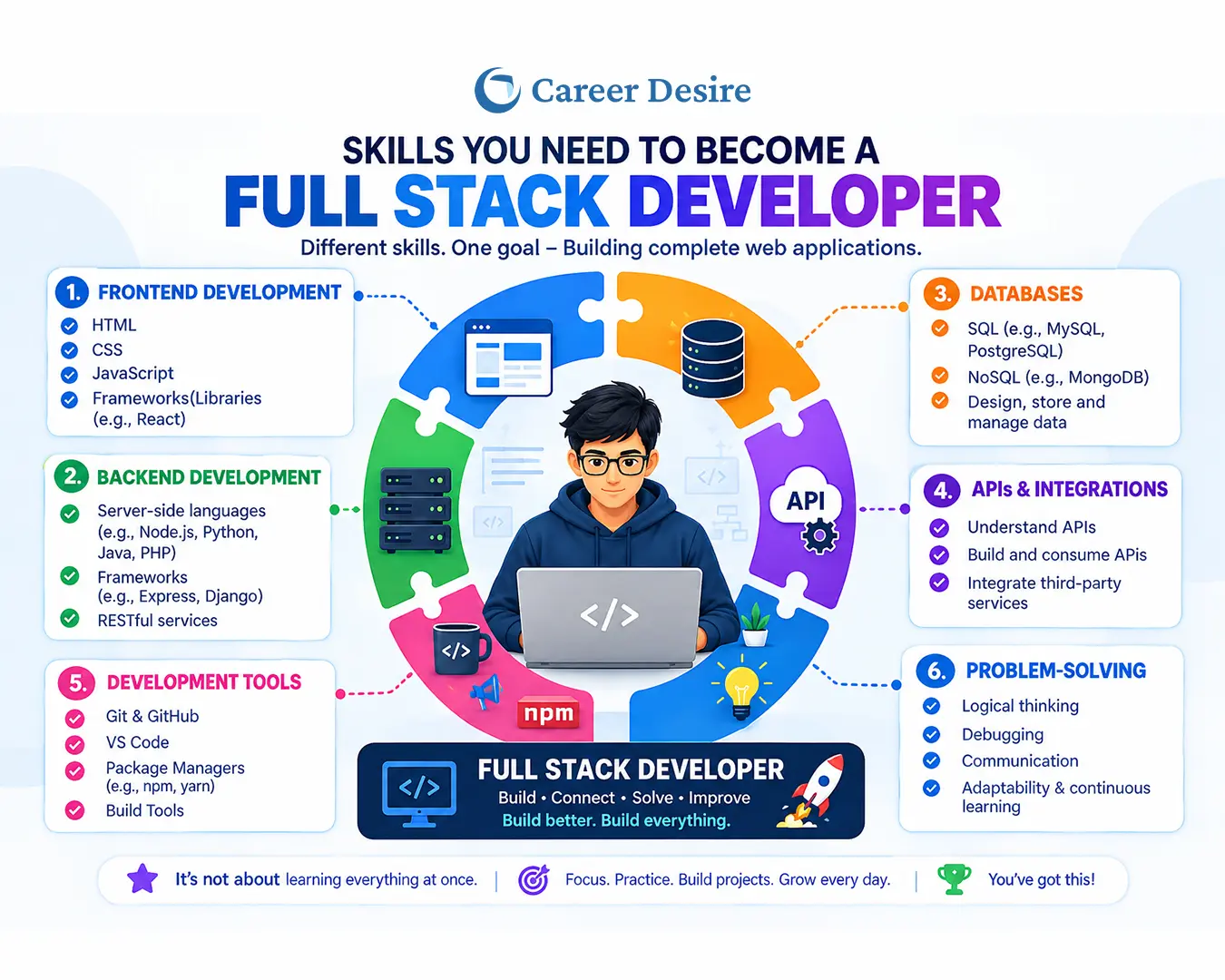
And remember, you don't have to learn everything at once. Start with the basics, choose one technology at a time and keep building small projects. As you build, you'll naturally discover what you need to learn next.
Not sure which skills you should learn or where to start? Explore Career Desire's career guidance services to identify suitable career paths and make your next move with clarity.READY TO TAKE THE NEXT STEP?
So, is Full Stack Development worth exploring? Absolutely — but it's not about trying to learn everything at once.
In this blog, we looked at what Full Stack Development actually means, what a Full Stack Developer does, whether it's still a good career choice and the skills you'll need to get started.
You know what you can learn. But do you know what's right for you? Discover career options based on your strengths, skills and interests.
Get career guidance from experts.And if you're wondering:
- How to actually start this journey as a fresher?
- What kind of opportunities are available?
- What you can expect from the career?
- How to prepare yourself for the job market?
This blog is just a beginning.
If you're ready to turn your interest into a career?,
In the next part covers how to start Full Stack Development as a fresher, prepare yourself for the job market and take your first step.
Related Articles
Full Stack Development in 2026: Where to Start, What to Learn and Career Opportunities
Learn how to become a Full Stack Developer in 2026, including where to learn, essential skills, common mistakes, career roles and top hiring industries in India.

Jobs at Risk: Future of Work in the AI Era | Career Guide 2026
Discover which jobs are most at risk in the AI era and how to future-proof your career. Learn about automation, job trends, and high-demand skills with Career Desire's resume, LinkedIn, interview, and career guidance support.
Blockchain Developer Career Guide After 12th: Skills, Jobs, Courses, Salary & Roadmap for Beginners
So, what exactly does a blockchain developer do? Think of them as the builders of a new kind of digital system one that's secure, transparent, and really hard to mess with.